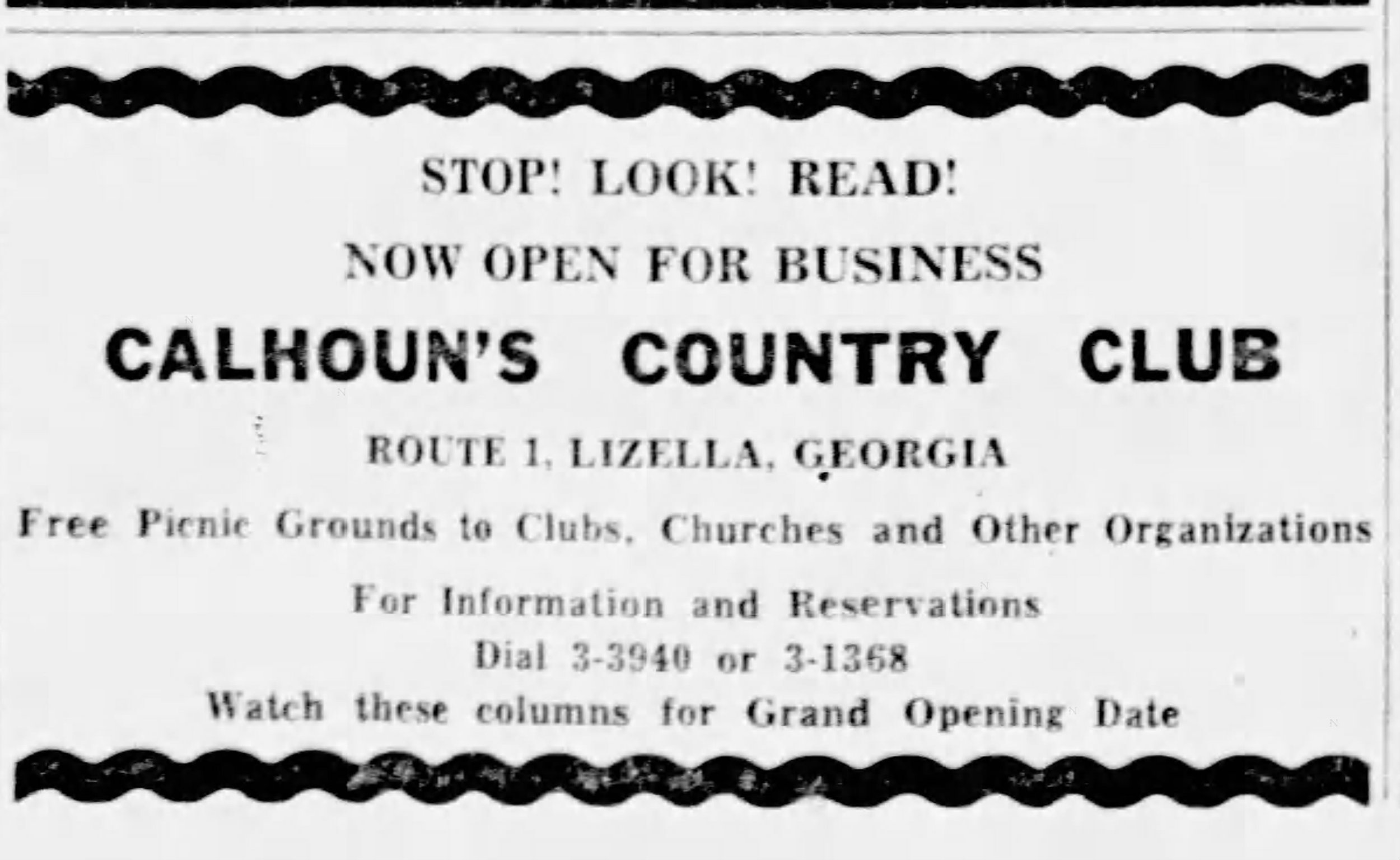
In the summer of 1955, as rock 'n' roll was taking its first steps into the American consciousness, Dr. Emory Martin Calhoun opened a country club in Lizella, Georgia, just outside of Macon. What began as a family business venture would become a vibrant part of Macon's extraordinary musical landscape during one of the most transformative periods in American music history.
The Birth of a Dream
Dr. Emory M. Calhoun, one of Joshua and Missouri Calhoun's nine children, had already established himself as a well-known dentist when he decided to venture into the entertainment business. In May 1955, around age 50, he applied for a beer license for what would become Calhoun's Country Club, located about 8 miles out of Macon on the Knoxville Road (off what is now Highway 80) in Lizella.
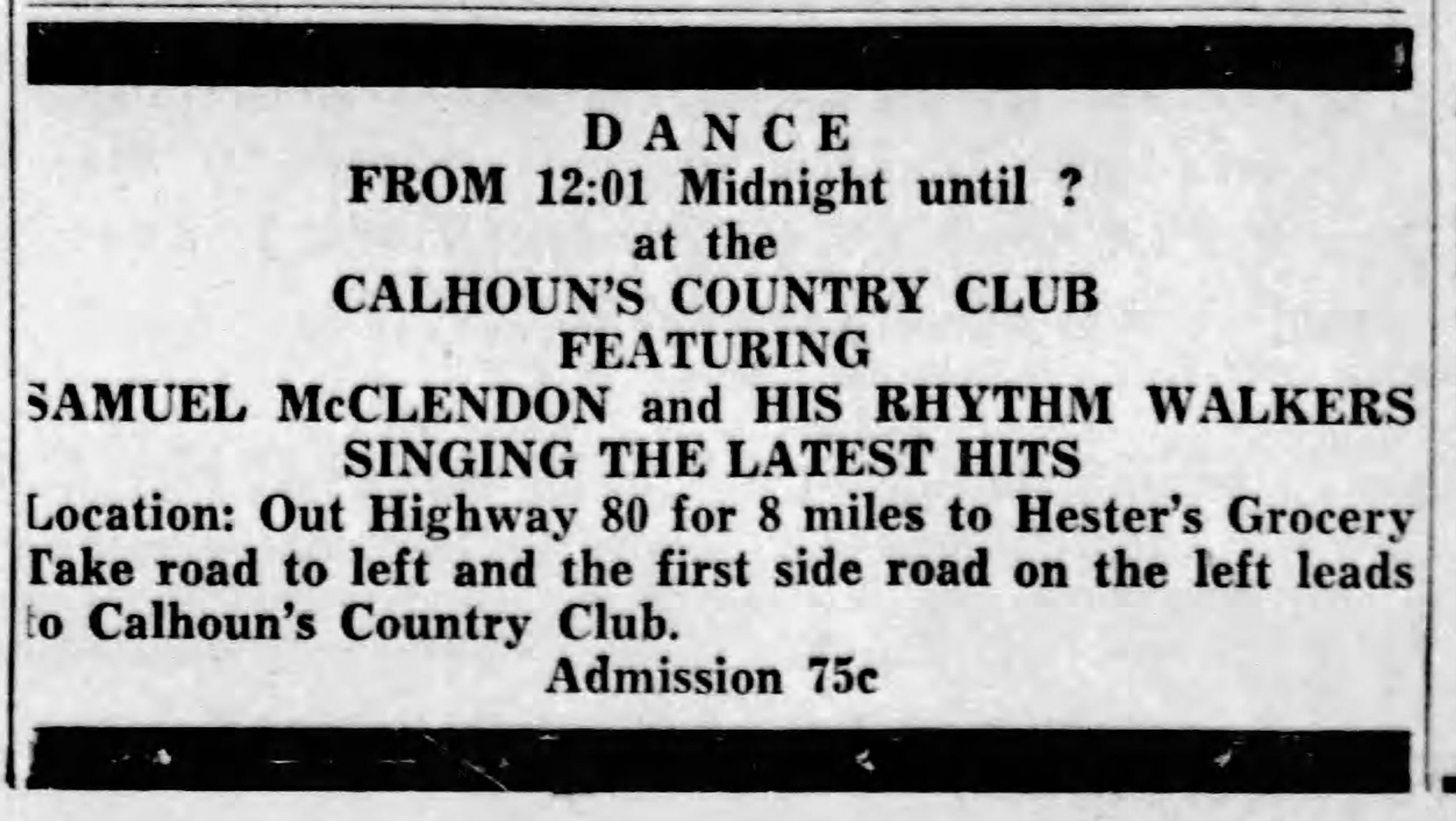
The timing couldn't have been more perfect. Macon was already a musical powerhouse. Little Richard was revolutionizing music just miles away, having grown up washing dishes at Miss Anne's Tic Toc before exploding onto the scene. James Brown was making his mark, and Otis Redding was dominating talent shows at the historic Douglass Theatre in Macon.
A Family Operation
The club officially opened its doors on June 19, 1955, with a newspaper advertisement announcing it was "NOW OPEN FOR BUSINESS" at Route 1, Lizella, Georgia. The venue offered something for everyone: free picnic grounds for clubs, churches, and other organizations, swimming, fishing, and of course, dancing.
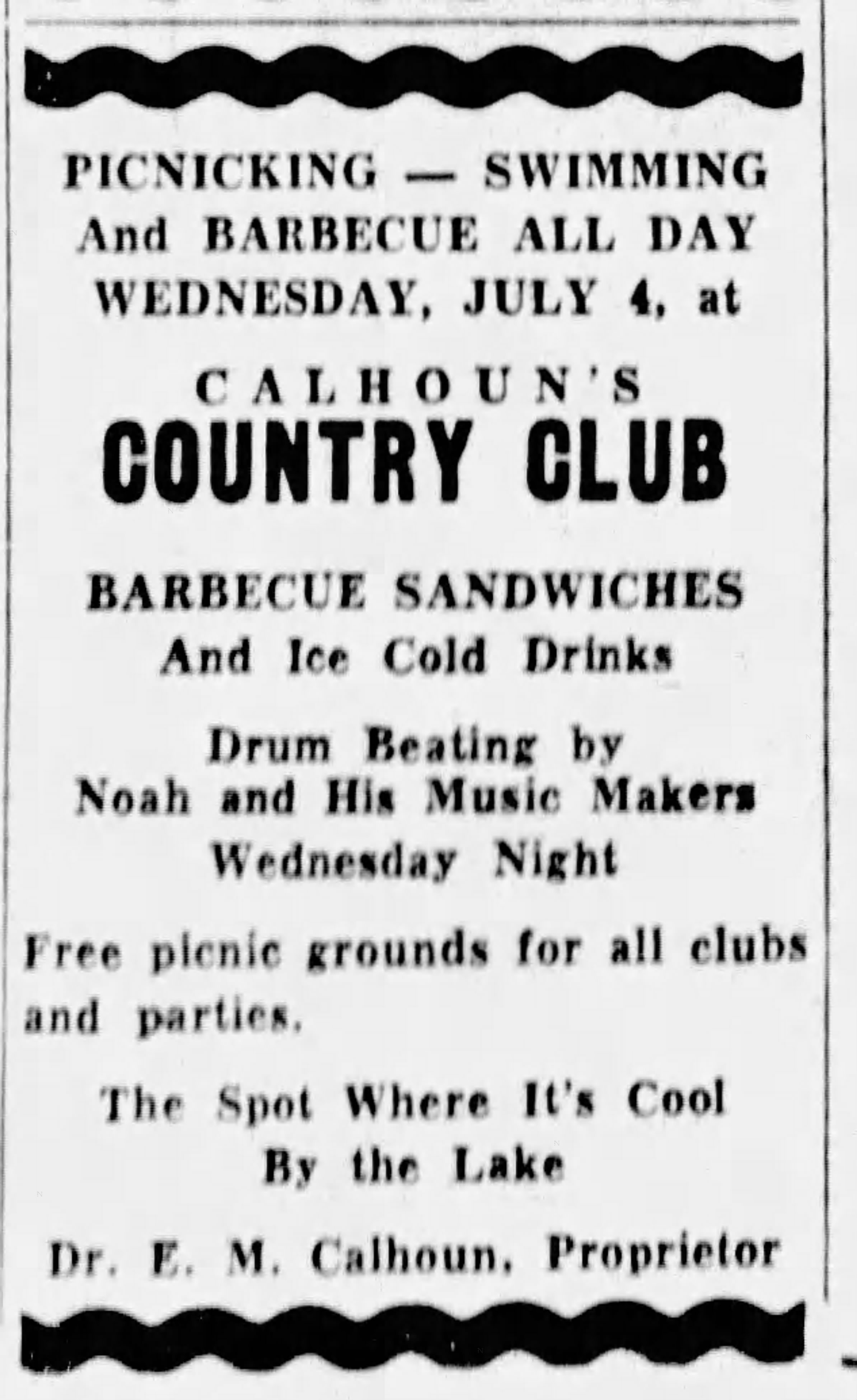
From the start, Calhoun's Country Club positioned itself as a community gathering place. The ads promised "Free Picnic Grounds" and featured events throughout the week. A typical July 4th weekend in 1955 included:
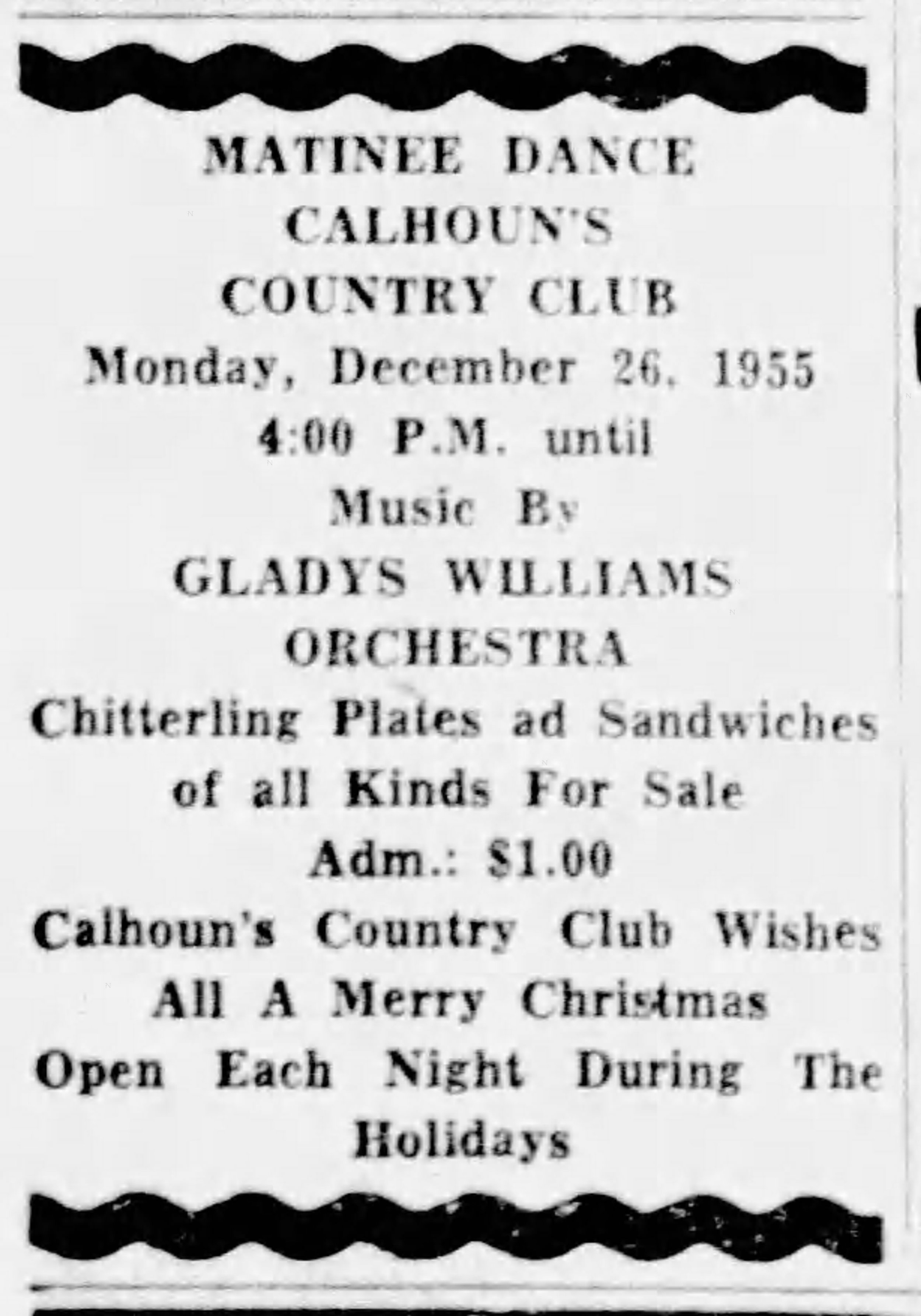
Friday night dances with Gladys Williams and Orchestra
Sunday night dances with Obie Kimbro and Orchestra
Monday breakfast dances with James Irving and Band
The club quickly became known for its barbecue, prepared by Ed Causey, whom advertisements called "Macon's Best." Free boat rides on the lake added to the attraction, creating what the ads called "The Spot Where It's Cool By the Lake."
Rock 'n' Roll Comes to the Country
By 1956 and 1957, as rock 'n' roll was sweeping the nation, Calhoun's Country Club embraced the new sound. The venue hosted performances by:
The Canaries - described as "A Sensational Singing Group" with hits like "I Believe" and "Rocking and Rolling"
James Ace - performing arrangements of "You Got Me Dizzy" and "Sweet Little Angel"
Blues Boy Mathews and His House Rockers - who became Friday night regulars
Little Willie L. Reid - bringing his band for Saturday night dancing
Noah and His Stompers - who performed "Old Fashion Drum Beating"
This was revolutionary for its time. In the Deep South during desegregation, music venues were creating spaces where cultural barriers were being challenged. As one source noted about Macon's music scene, bands like the Allman Brothers had "five white guys and one Black guy" making music together. A cultural revolution in itself.
Community Events and Creative Marketing
Dr. Calhoun showed considerable business acumen in promoting his venue. The club hosted diverse events including:
Turkey shoots on holidays
Shooting matches ("The Sport of Sports")
Thanksgiving and Christmas balls
Mother's Day celebrations
Labor Day festivities
Local social clubs like the Gay Knights Social and Savings Club and the Normal Lites Social and Saving Club organized trips to the venue, showing its importance as a social hub for Macon's Black community.
Challenges and Changes
Running a club wasn't without its challenges. The beer license application process was scrutinized, and there were legal issues. In 1957, the venue changed hands at least temporarily, with newspaper ads announcing "NEW MANAGEMENT" under Mrs. Bertha Driskell. Court records show she was later charged with alcohol violations, and Sheriff's deputies reported finding illegal whiskey at the club.
By mid-1957, other operators took over, including Mose Appling, who Dr. Calhoun reportedly rented the location to. Later that year, Walter Whitehead applied for a new license, and Sheriff Wood requested the club's beer and dance hall licenses be suspended due to concerns about moonshine sales.
Legacy and Impact
While Calhoun's Country Club operated for only a few years, its significance extends beyond its brief existence. It represented the entrepreneurial spirit of the Calhoun family, transforming inherited farmland into a thriving business that served the community.
More importantly, it was an extension of Macon's incredible musical ecosystem. The same city that gave birth to Little Richard's revolutionary sound, nurtured Otis Redding's soul, and would later become the epicenter of Southern Rock through Capricorn Records, also had venues like Calhoun's Country Club where regular folks could dance to the newest sounds every weekend.
The club existed during a pivotal moment when rock 'n' roll was breaking down barriers and creating a new American culture. In venues like Calhoun's, located just outside the city limits where perhaps the rules were a bit more relaxed, the music that would change the world found eager audiences ready to dance into the future.
Today, while the original club is long gone, its memory lives on as part of the remarkable story of how a family built businesses, created community spaces, and contributed to one of the most important musical movements in American history; all on land that their ancestors had fought to preserve through generations.